
What Nobody Tells You About Buying a Used RV (From Someone Who Actually Did It)
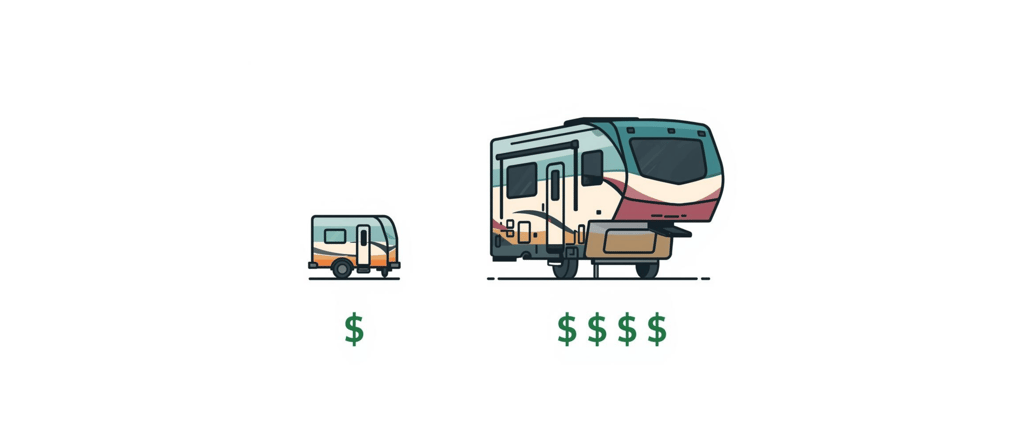
New fifth wheels with bunkrooms cost $35K-$50K+, but we weren't sure we'd stick with RV camping long enough to justify that investment—so we bought a 2014 used Salem for under $15,000. Between the broken stove, worthless mattress, new tires, and preventative maintenance, we've added about $2,000 to that price tag, but we learned a HUGE lesson: many private campgrounds won't accept RVs older than 10 years without photo approval of the exterior condition. Our advice? Buy used if you're testing the RV lifestyle, buy new once you're committed—and factor in that 10-year rule before you purchase.
2/21/20269 min read
The $35k Question We Had to Answer
Here's the conversation my husband and I had after falling in love with RV camping in that borrowed camper:
Me: "We should buy our own fifth wheel!"
Stephan: "Okay, what do we want?"
Me: "Bunkroom for the boys, decent space, something that feels like home."
Stephan: pulls up new RV prices "That'll be $35,000 to $50,000."
Both of us: immediate panic
Here's the thing—we LOVED our borrowed camper experience. It was magical. It converted my tent-hating husband into a camping enthusiast. But dropping $35K+ on something we'd only tried once? When we weren't even sure we'd stick with RV camping long-term?
That felt like a massive gamble.
So we started looking at used fifth wheels, and eventually bought a 2014 Forest River Salem 38' for under $15,000.
Now, a year and multiple camping trips later, I'm going to tell you everything I wish someone had told US about buying a used RV—the good, the bad, and the expensive surprises nobody mentions.
Why We Chose Used (And Why You Might Too)
Let's be honest about why we went the used route:
1. Budget Reality Check Our budget was under $15,000. New RVs with the features we wanted were $35,000-$50,000. The math was pretty simple—we could afford used, we couldn't afford new.
2. The Learning Curve Cushion We were brand new to RV ownership. We didn't know what we didn't know. The idea of making rookie mistakes on a $40,000 brand-new rig was terrifying. With a used camper, we had room to learn, mess up, and figure things out without the pressure of protecting a massive investment.
3. Commitment Uncertainty While we loved that borrowed camper weekend, we honestly weren't sure if RV camping was a long-term thing for us or just a fun phase. Buying used meant we could test the lifestyle without the financial commitment of buying new.
If it turned out RV life wasn't for us? We could resell without taking a huge loss.
Spoiler: We're totally hooked, and our next camper will be new. But buying used first was absolutely the right call for us.
The Search: From Cautious Browsing to Serious Hunting
We casually browsed online listings for months—Facebook Marketplace, dealership websites, RV-specific sites. Just window shopping, getting a feel for what was out there and what features mattered to us.
When we got serious? It took about two weeks of focused searching before we found our Salem.
We started on Facebook Marketplace because the deals looked amazing. And some were! But we quickly learned that buying from private sellers on Facebook required a LOT of vetting. More on that in a minute.
Eventually, we went to an RV dealership that specialized in used campers. Having everything in one place to compare made the process so much easier.
Our Must-Haves (And What Actually Mattered)
Going into the search, our list was pretty short:
Non-negotiable:
Bunkroom (three boys = bunkroom required)
Enough space to not feel cramped
Nice to have:
Dinette (I preferred it, but wasn't a dealbreaker)
That's it. We kept our list focused because we knew being too picky would either blow our budget or drag out the search forever.
The "This Is The One" Moment
I walked into our 2014 Forest River Salem and immediately felt it.
The living room and kitchen were SPACIOUS. Not cramped, not claustrophobic—actually roomy enough for our family of five to exist without constantly bumping into each other.
Then I saw the second door that went straight into the bathroom. Game changer. No more kids tracking dirt through the entire camper to wash their hands. Direct bathroom access from outside? Genius.
But the moment I knew we were buying this camper? When I stepped into the bunkroom.
It just FIT. Everything we needed and wanted, all in one package, within our budget.
Stephan did his inspection (more on that below), we took a calculated risk on a few issues we'd spotted, and we bought it.
Stephan's Industry Insider Advantage (And What You Should Look For)
Here's where having a husband who worked in RV manufacturing for years became invaluable.
Stephan knew where the "weak points" in campers tend to be. He knew what corners manufacturers cut to save costs. He knew exactly what to look for during an inspection.
What he checked:
Floors: Tested for soft spots that indicate water damage or rot
Walls: Looked for warping that signals hidden leaks
Seals and seams: Checked all the places water could sneak in
Overall construction: Assessed how well (or poorly) it was built
His insider knowledge gave us confidence. We knew what we were getting into. We understood the risks. And when he gave the thumbs up, we trusted it.
If you DON'T have an RV industry expert in your family, I highly recommend:
Hiring an RV inspector before buying (yes, this is a thing and worth every penny)
Bringing someone who knows RVs to walk through with you
At minimum, doing extensive research on common issues with specific makes/models
The Red Flags We Walked Away From
Facebook Marketplace taught us a valuable lesson: if a deal looks too good to be true, zoom in on those photos.
Stephan spotted HUGE red flags in some listings that looked perfect at first glance:
Water damage hidden in shadowy photos
Structural issues disguised by strategic camera angles
Obvious neglect that sellers tried to downplay
We walked away from several "great deals" because Stephan's trained eye caught problems that would've cost us thousands to fix.
Don't skip the inspection. Don't let excitement override caution. Walk away from red flags, even if you really want that specific camper to work out.
The Issues We Found (And What They Actually Cost)
Okay, let's talk about the problems we discovered with our used fifth wheel—because there WERE problems. That's the reality of buying used.
Issue #1: Ripped Siding by the Slide-Out
When we found it: Before we bought it
Our decision: Calculated risk—we could fix it ourselves
The fix: 10 minutes, special durable caulk
Cost: Less than $20
Lesson: Not every flaw is a dealbreaker if you can fix it cheaply
Issue #2: Broken Stove
The problem: Wouldn't turn on at all
Our solution: RV surplus store 10 minutes away (bless that place)
Cost: $100 for a brand-new camper stove (vs. $450 online)
Lesson: Know where your local RV surplus/parts stores are—they're lifesavers
Issue #3: Worthless Mattress
The reality: It was BAD. Like, "how did anyone sleep on this" bad
Our solution: Amazon purchase before our second trip
Cost: $200 on sale
Lesson: Budget for a mattress replacement if you're buying used
Issue #4: Outdoor Kitchen Frame
When it broke: After we'd been using it
The fix: Replaced the framing piece ourselves
Time: About an hour of work
Lesson: YouTube is your friend for DIY RV repairs
Issue #5: Rough Roads = Broken Drawers
What happened: On our trip to Alabama, brutal roads broke some drawers
The fix: Repair work (ongoing battle with RV life, honestly)
Lesson: RVs shake, rattle, and break. It's normal. Learn to fix things.
Issue #6: Water Heater Fuse
The problem: Water heater would only run on propane
The fix: Replaced a blown fuse
Lesson: Start with the simple fixes before assuming major problems
The Maintenance Investment Nobody Warns You About
Here's what we spent BEYOND the purchase price on repairs, upgrades, and maintenance:
Outdoor grill attachment: $119 (old one was toast)
Roof sealing tape: $105 (preventative maintenance)
New tires: $600 (could've gone cheaper, chose quality)
Canvas winter cover: $350 (protecting our investment)
New stove: $100
New mattress: $200
Misc repairs: Various small fixes
Total extra investment: Close to $2,000
So our "under $15,000" fifth wheel actually cost us around $17,000 all-in after the first year.
Is that a lot? Sure. But it's still WAY less than $35,000-$50,000 for new, and we learned SO much in the process.
The 10-Year Rule Nobody Told Us About (THIS IS HUGE)
Okay, here's the bombshell that I wish SOMEONE had mentioned before we bought a 2014 camper in 2024:
Many private campgrounds and resorts have a 10-year age limit on RVs.
Yes, you read that right. If your camper is older than 10 years, some campgrounds won't let you book a site.
Our 2014 Salem? It's now over 10 years old. We've had to send photos of our camper to resorts to prove it's in good condition before they'd accept our reservation.
What they're looking for: Overall outward appearance. They want to make sure your camper isn't falling apart, leaking, or an eyesore.
Where this applies: Mostly private campgrounds and resorts. State parks typically don't enforce this rule.
Thankfully, our camper is well-maintained and has passed every photo inspection so far. But it's an extra step we have to take that people with newer campers don't deal with.
If you're buying used, factor in the age: A 2019 camper bought in 2024 gives you 5 good years before hitting that 10-year mark. A 2014 camper? You're already dealing with restrictions.
This doesn't mean don't buy older—it just means GO IN WITH YOUR EYES OPEN.
Would We Buy This Camper Again? (The Honest Answer)
Knowing everything we know now—the repairs, the maintenance, the 10-year rule, the money we've put into it—would we still buy this specific used fifth wheel?
Yes.
Here's why:
1. It Still Fits Our Budget Even with $2,000 in repairs and upgrades, we're at $17,000 total. That's still less than half what we would've paid for new.
2. We Haven't Dumped TOO Much Into It $2,000 sounds like a lot, but spread over a year of learning, fixing, and upgrading? It's reasonable. We're not underwater. We're not in financial regret territory.
3. It Taught Us What We Actually Need This camper showed us what features we love (second bathroom door!), what we could live without, and what we'll prioritize when we buy new.
4. We Proved We Love RV Life We're not wondering "what if" anymore. We KNOW we're committed to this lifestyle, which makes spending more on our next camper a smart investment instead of a gamble.
Why Our Next Camper Will Be New
We've decided that when we're ready to upgrade, we're buying new. Here's why:
1. The Warranty Peace of mind is worth money. When things break on a new camper, it's covered. When things break on our used camper? That's on us.
2. Better Floor Plans New RV designs have evolved. Floor plans make more sense for families our size. We've learned what works and what doesn't, and newer models offer features our 2014 doesn't have.
3. No 10-Year Rule Stress Buying new means we get a full decade (at least) before we have to worry about campground age restrictions.
4. We've Learned on This One We made our rookie mistakes on a used camper. We know how to maintain an RV now. We're ready to invest in something that'll last us longer with less immediate repair needs.
Buying used first was the right move. Buying new next will also be the right move. Different stages, different needs.
My Advice: Should YOU Buy Used?
Buy used if:
You're new to RV life and not sure you'll stick with it long-term
Your budget is tight and you need to stay under a certain amount
You're handy or willing to learn DIY repairs
You have access to RV inspection expertise (hire someone if needed!)
You're okay with cosmetic imperfections and some wear-and-tear
Buy new if:
You're 100% committed to RV life for the long haul
You want warranty coverage and peace of mind
You're not interested in DIY repairs or dealing with unknowns
You have the budget and want specific features/floor plans
You plan to camp frequently at private resorts (avoiding the 10-year rule)
The sweet spot for used? Based on our experience, I'd say either a few years old (3-5 years gives you good value with less age restriction stress) or bite the bullet and go brand new.
Anything 8-10+ years old? Expect to deal with:
More repairs
Potential campground restrictions
Higher maintenance costs
More unknowns about previous owner care
The Bottom Line: Ask Yourself One Question
Before you decide used vs. new, ask yourself this:
How much time do you actually plan on spending in your camper?
If you're weekend warriors camping a few times a year? Used might be perfect—you're not putting massive wear-and-tear on it, and the budget savings let you spend money on actual camping trips.
If you're planning to camp every other weekend plus long trips? New might be worth it—you'll use it enough to justify the investment, and warranty coverage matters more when you're using it heavily.
And here's my final piece of advice that applies whether you buy new or used:
Buy what your family NEEDS, not what's trendy or "in season."
We didn't buy the fanciest camper or the newest model. We bought what fit our family, our budget, and our actual camping style.
A year later? No regrets.
Your Turn: New or Used?
Are you team "buy used and learn as you go" or team "buy new and avoid the headaches"? Have you bought a used RV? What surprised you most? Drop your experiences in the comments—we're all learning together! 👇🏻
Want to follow our RV ownership journey (repairs, upgrades, and all)? Join our tribe here for honest content about real RV life—the good, the expensive, and the "why didn't anyone warn me about that?!"
See you on the trail! 🫶🏻
P.S. - That RV surplus store 10 minutes from our house? Absolute lifesaver. Find yours before you need it. Trust me on this.
Join Our Tribe
Ready to join our beautifully chaotic adventure? Grab your coffee (or wine—no judgment here) and let's roll!
© 2025. All rights reserved.